 By Rabiya Maqbool
If you have been searching for a framework that genuinely bridges bold thinking with academic precision, Rowdy Oxford Integris might be the most important concept you encounter this year. In a world where siloed expertise keeps producing half-solutions, this approach offers something different: a complete, human-centered model that challenges assumptions, applies rigorous evidence, and connects ideas to the real systems they are meant to serve. It is not a product, a single company, or a campus address. It is a living philosophy with growing traction across education, technology, community development, and healthcare.
What makes the Rowdy Oxford Integris model stand apart from dozens of innovation frameworks circulating in business and academic circles today is its refusal to be neat and comfortable. It is unapologetically three things at once: disruptive, disciplined, and deeply integrative. These three qualities tend to cancel each other out in most organizations, but the framework insists they must coexist if any meaningful progress is to happen. That tension is not a bug in the model. It is the feature.
This pillar guide covers every dimension of the approach with depth and honesty. You will find a clear explanation of the three-pillar model, its historical context, real-world applications, and practical steps for applying it in your own organization or community. Whether you are an educator seeking better student engagement frameworks, a researcher navigating the best Rowdy Oxford Integris accommodation, a leader aligning innovation with ethics, or someone searching for reliable student housing Oxford options, this guide was built for you.
Unlock more Insights Regarding Education
What Is Rowdy Oxford Integris? Understanding the Framework
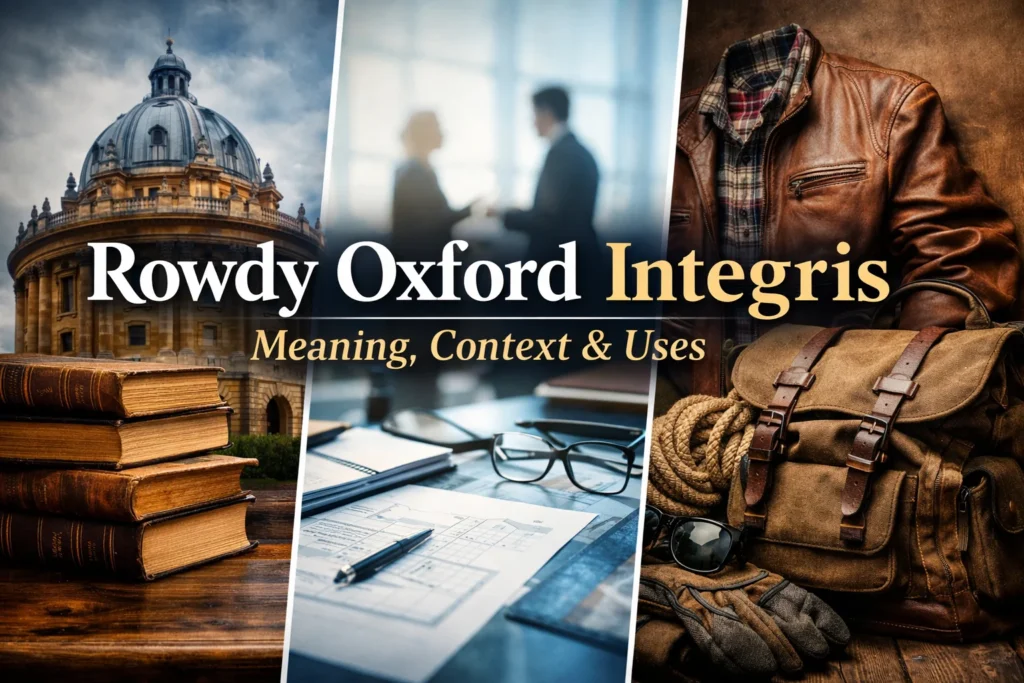
Rowdy Oxford Integris is a three-pillar decision-making and innovation framework. Each word in the name carries a distinct, deliberate meaning, and together they form a coherent methodology for addressing complex, multi-dimensional challenges.
Rowdy represents bold energy, the willingness to challenge default thinking, question outdated assumptions, and push into uncomfortable territory where legacy systems no longer serve real needs. In this context, rowdiness is not recklessness. It is the courage to ask difficult questions and pursue unconventional answers.
Oxford draws on the intellectual tradition associated with one of the world’s most respected academic institutions. It signals rigorous, evidence-based reasoning grounded in research, ethics, historical context, and scholarly depth. This component ensures that any disruption is anchored in substance, not novelty for its own sake.
Integris, derived from the Latin concept of integrity and integration, focuses on bringing parts together into a coherent whole. It promotes systems thinking, cross-sector collaboration, and the design of solutions that work within existing ecosystems rather than bypassing them.
When these three elements operate together, the methodology creates a practical space where organizations, communities, and individuals can tackle problems that no single discipline can solve alone.
The Origins of Rowdy Oxford Integris Framework

The story begins in the early 2020s, during one of the most turbulent periods in recent history. The COVID-19 pandemic, accelerating climate change, widening social inequality, and the rapid destabilization of institutional trust all converged to expose a critical weakness in modern problem-solving: fragmentation.
Academics were producing brilliant research that never reached communities. Technologists were building tools that ignored the human systems they were supposed to serve. Policymakers were applying narrow frameworks to wide-scale crises. The results were predictably insufficient.
A loosely connected group of thinkers spanning universities, startups, non-profits, and civic organizations began asking what a better model would look like. They were not interested in another framework with a catchy acronym and a consulting deck behind it. They wanted something more honest, more flexible, and more demanding. The result was the working philosophy now known as Rowdy Oxford Integris.
Early applications included urban sustainability labs in European cities, digital literacy programs for underserved communities in Southeast Asia, and ethics task forces combining philosophers, engineers, and community advocates to govern AI systems. These pilots demonstrated that integrating bold disruption with deep scholarship and genuine cross-sector collaboration produced results that siloed approaches simply could not replicate.
The Three Core Pillars of Rowdy Oxford Integris Explained

Every application of the Rowdy Oxford Integris model is grounded in three interconnected pillars. Understanding them individually is straightforward. Holding all three in productive tension simultaneously is where the real skill lies.
The Rowdy Pillar: Bold Disruption with Purpose
The Rowdy pillar asks what we are taking for granted. Which assumptions are we treating as permanent that should be challenged? Where has legacy thinking built a ceiling that should be removed? Organizations that apply this lens effectively tend to surface problems earlier, because they do not wait for failure to reveal the cracks in a system. This spirit of productive disruption, guided rather than reckless, is what separates this approach from simpler calls to think outside the box.
The Oxford Pillar: Intellectual Rigor and Ethical Depth
The Oxford pillar grounds the methodology in evidence, research, and moral responsibility. Bold ideas must be tested. Disruption must serve the public good. This component insists that speed is not a virtue when it bypasses accountability. Teams applying this lens invest time in genuine research, consult multiple knowledge sources, including academic literature and lived community experience, and apply ethical frameworks that honestly ask who benefits and who might be harmed.
The Integris Pillar: Systems Thinking and Whole-Design
The Integris pillar recognizes that solutions designed in isolation fail when introduced to the real world. This component demands that any proposed solution understand and respect the ecosystem it will enter from day one. It means connecting hardware with pedagogy, technology with governance, and innovation with maintenance. The result is solutions that last, because they are built to fit the systems around them rather than override them.
Core Principles That Make the Model Work in Practice
Beyond its three pillars, the framework operates on guiding principles that shape how teams apply it across sectors and challenges.
Radical Interdisciplinarity: Why One Discipline Is Never Enough
The model is built on the conviction that genuinely complex problems require genuinely diverse teams. Climate change is not only a scientific problem. It is also an economic problem, an equity problem, a governance problem, and a cultural problem. The interdisciplinary principle means assembling teams that deliberately include voices from unrelated domains. The unexpected connection between a sociologist and a data engineer, or between an artist and a supply chain specialist, is where many of the strongest insights come from.
Ethical Disruption: Innovation That Earns Its Right to Exist
One of the sharpest edges of Rowdy Oxford Integris‘s approach is its insistence that disruption must be earned through ethical reasoning, not assumed as a right. Before launching a product, policy, or program, teams ask hard questions: who carries the burden of this disruption? Who gains? What happens to people who cannot adapt? These are not rhetorical questions. They actively shape the design itself. The result is innovation that tends to be more durable, because it builds social license rather than burning it.
Real-World Applications of Rowdy Oxford Integris Across Key Sectors
The real test of any framework is what it produces when applied to concrete problems. The Rowdy Oxford Integris methodology has informed tangible work in urban sustainability, digital equity, ethical technology governance, and healthcare leadership.
In urban planning, coalitions applying these principles have designed green infrastructure networks that integrate transport systems, community spaces, ecological corridors, and real-time air quality monitoring into a unified whole. One European city pilot reported an 18% reduction in local PM2.5 pollution levels within two years alongside increased foot traffic in revitalized districts.
In education technology, the approach has driven learning programs that do not simply distribute hardware or introduce software platforms. They integrate pedagogy, cultural relevance, community leadership, and long-term maintenance systems. Programs built on these principles consistently report lower dropout rates and higher student engagement, particularly in underserved communities where technology-led interventions have historically failed.
In AI governance, the methodology informed the development of ethical AI guidelines by multi-stakeholder consortia combining legal scholars, civil society organizations, engineers, and policy experts. These guidelines have been adopted at national government levels because they work within existing legal and institutional systems rather than ignoring them.
In healthcare, these principles have shaped digital health integration strategies, including the alignment of electronic health records with telemedicine systems, community health programs, and predictive analytics. Healthcare systems applying the Rowdy Oxford Integris model report better patient outcomes and greater staff alignment with organizational change processes.
Best Oxford Accommodation and Student Housing Oxford

One of the most tangible dimensions of the Rowdy Oxford Integris intellectual tradition is where you actually live and study. For students, researchers, and visiting scholars engaging with these values, finding the best Oxford accommodation is not just a logistical question. It shapes the quality of your thinking, your access to the university community, and your ability to participate in the collaborative, interdisciplinary culture that Oxford demands.
Best Oxford Accommodation: What to Look for and Where to Start
The best Oxford accommodation depends on a combination of proximity, affordability, community, and amenities. Oxford has a wide range of options spanning traditional college-owned housing, purpose-built student accommodation blocks, private rentals, and managed student residences.
College accommodation is typically the most affordable option and offers the closest integration with university life. Most undergraduate students in their first year are guaranteed a place within their college, and the community that forms around shared spaces, dining halls, and common rooms is a significant part of what makes Oxford distinctive. For postgraduate students and visiting scholars, purpose-built managed residences often offer better privacy and facilities while maintaining easy access to university buildings.
Areas such as Jericho, Cowley Road, Headington, and East Oxford have well-established student communities with access to transport and a strong social environment. Key factors when evaluating options include distance to the Bodleian Library and your faculty, quality of shared study spaces, lease flexibility, and total cost of living, including utilities and internet.
Student Housing Oxford: Navigating the Market with Confidence
The student housing Oxford market can feel overwhelming, particularly for students arriving from outside the UK. Demand is high, availability in premium areas is limited, and the academic calendar means the best options tend to be secured well in advance.
The key to navigating student housing in Oxford effectively is starting early. University accommodation offices publish information about guaranteed college housing, off-campus managed residences, and approved private landlords. The Oxford Student Union housing service offers impartial guidance and flags landlords with poor track records.
For students seeking private rentals, the main platforms include Rightmove, Zoopla, and SpareRoom. Budget planning should include not just rent but also the council tax exemption process for full-time students, energy costs, and transport. Mapping your typical daily routes before selecting accommodation is a practical step many students overlook, but consistently wish they had done sooner.
Why Rowdy Oxford Integris Approach Matters More Than Ever in 2025 and 2026
The relevance of the Rowdy Oxford Integris model is not abstract. It answers a very specific problem that has become impossible to ignore: our most important challenges are deeply interconnected, and we are still mostly trying to solve them with tools designed for isolated, single-discipline problems.
In a world where moving fast has repeatedly led to broken trust and broken systems, the framework proposes a different standard. It insists that innovation must be:
- Human-centered, not just user-centered
- System-aware, not just product-focused
- Ethically anchored, not just efficient
- Community-tested, not just internally validated
- Designed for durability, not just optimized for launch
Younger generations entering the workforce and academic life are explicitly demanding more purpose-driven and systemic approaches to innovation. This methodology speaks directly to those values and provides a practical operational model for living them out day to day.
Challenges and Honest Criticisms
Any framework worth taking seriously deserves honest scrutiny. The Rowdy Oxford Integris model has real strengths, but it also faces legitimate criticisms that should be acknowledged rather than dismissed.
1. Ambiguity of Scope Some argue that the framework is too flexible to be consistently measurable. Without fixed KPIs, how do teams know if it is actually working? Proponents respond that context-specific indicators are more honest than universal metrics, but the burden is on teams to define and share those indicators publicly.
2. Resource Intensity True integration requires time, trust, and investment that faster top-down approaches do not. Building interdisciplinary teams and iterating with community feedback is slower and costlier. The counter-argument is that this upfront investment prevents far greater costs down the line.
3. Risk of Co-optation There is a genuine concern that the term could become marketing language used by organizations that practice none of it with integrity, similar to how sustainability and AI ethics have sometimes been hollowed out. The response is to emphasize transparency, peer accountability, and open documentation of methods and outcomes.
How to Apply Rowdy Oxford Integris Model Step by Step
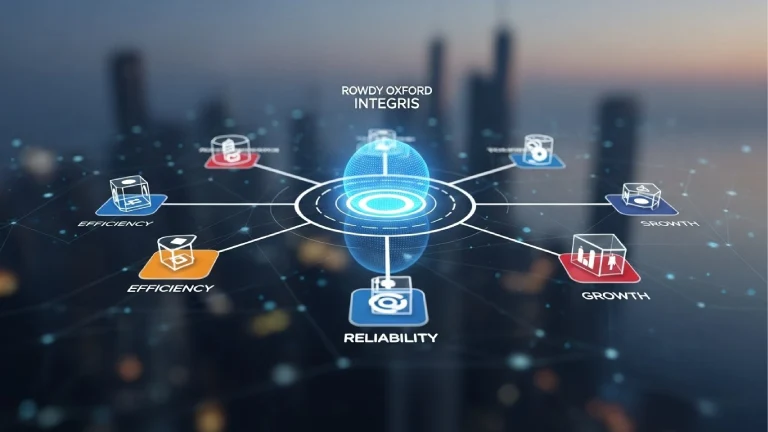
Getting started does not require formal certification. It requires commitment to better questions, more diverse teams, and designing for integration rather than isolation. Here is how:
Step 1: Assemble a Diverse Team. Include people with different disciplines, backgrounds, and skill sets. Bring in end-users and community members alongside technical experts.
Step 2: Define the Problem Holistically. Avoid narrow problem statements. Ask not just what you want to build but what outcome you are trying to support and what role your solution plays in that larger picture.
Step 3: Apply the Three Lenses
- Rowdy: What assumptions should we challenge?
- Oxford: What does the evidence and ethical reasoning say?
- Integris: How does this connect to existing systems and real needs?
Step 4: Prototype and Iterate. Build small, test honestly, and iterate based on what you actually learn. Use feedback to re-examine foundational assumptions, not just surface features.
Step 5: Share and Scale Responsibly. Document your process openly. Scale only when integration is proven, not when hype or funding demands it.
The Future of Integrated Innovation
Looking ahead, Rowdy Oxford Integris‘ approach is positioned to become an increasingly influential reference point across fields that are simultaneously under pressure to innovate and under scrutiny to do so responsibly. Imagine a future where:
- City planners design climate-resilient neighborhoods that prioritize equity and biodiversity alongside infrastructure
- Health systems deploy AI diagnostics co-developed with patients, clinicians, and ethicists from the ground up
- Educational curricula are redesigned through collaborations between students, teachers, artists, and scientists working as genuine equals
- Governments apply integrated thinking to technology regulation, ensuring policy keeps pace with innovation without stifling it
The vision is pragmatic, not utopian. No single discipline holds all the answers, but together we can build better questions and more resilient solutions.
FAQs
Q1. What is Rowdy Oxford Integris?
A bold innovation framework combining disruptive thinking, academic rigor, and systems integration to solve complex real-world problems.
Q2. Who can use it?
Anyone, including educators, leaders, policymakers, and community organizations, is seeking ethical and integrated solutions.
Q3. Is it tied to Oxford University?
No. It draws inspiration from Oxford’s intellectual tradition but is not affiliated with or owned by the university.
Q4. What is the best Oxford accommodation for students?
College-owned housing is most affordable. Areas like Jericho and Headington are top choices for private student housing in Oxford.
Q5. How do I start applying it?
Build a diverse team, reframe your problem holistically, and apply the three lenses: challenge boldly, research deeply, and integrate fully.
Conclusion
Rowdy Oxford Integris is one of the most practical and genuinely demanding frameworks for innovation to emerge in recent years. It does not offer easy answers or quick fixes. What it offers is a coherent way of approaching problems that are too big, too interconnected, and too important to be solved by any single discipline working alone. The framework asks something significant of anyone who engages with it seriously: be willing to challenge what you think you know, hold your ideas to a high evidential standard, and design every solution to work within the real world rather than the world as you wish it were.
For students finding their feet in the best Oxford accommodation, for researchers navigating the student housing Oxford market, for leaders building ethical organizations, and for policymakers designing more resilient systems, the Rowdy Oxford Integris model offers a living, evolving practice equal to the complexity of the moment we are in. In a fragmented world, integration is not optional. It is the most responsible and productive stance available to us. Challenge boldly. Think deeply. Integrate fully. The work begins now.