 By Rabiya Maqbool
Writing a thesis is one of the hardest things a student will ever do. The blank page, the pressure, the endless research… it can feel completely overwhelming. But here is the truth: most students who struggle with their thesis do not lack intelligence. They just lack a clear plan.
Whether you are working on your first undergraduate paper or pushing through a PhD, the right thesis writing tips can make the difference between a thesis you are proud of and one you just scraped through. This guide gives you everything in one place, plain, honest, and actually useful.
What Makes a Thesis So Hard to Write?

Before we get into the tips, let us be honest about why thesis writing feels so painful for most students.
- You have never written something this long before
- You are expected to come up with original ideas under pressure
- You do not always know if you are on the right track
- Fear of judgment makes it hard to even start
The good news is that none of these problems is permanent. Every single one of them has a fix.
Tips for Writing a Thesis Statement First (Yes, Start Here)
Your thesis statement is the heart of your entire paper. Get this right, and everything else becomes easier.
A strong thesis statement does three things:
- It makes a clear, specific claim
- It is something a reader could actually disagree with
- It gives your reader a reason to keep going
Tips and Examples for Writing Thesis Statements
Weak: “Social media affects teenagers.” Too vague. Too obvious. Not worth arguing.
Strong: “Unrestricted social media use among teenagers worsens anxiety because it creates constant pressure for social validation that adolescent brains are not equipped to handle.”
See the difference? One says something. One says nothing.
Tips for Writing a Strong Thesis Statement in 3 Simple Steps
- Write your topic in one sentence
- Ask yourself, “So what?” about that sentence
- Turn your answer into one clear, arguable claim
That is the whole process. Three steps, done.
Tips on Writing Thesis Statements for Different Paper Types
- Science papers: Make a factual, data-backed claim
- Humanities papers: Make an interpretive argument about meaning or impact
- Policy or business papers: Recommend a course of action based on evidence
Matching your thesis statement style to your subject is one of the most overlooked tips for writing a good thesis statement that most students never think about.
Core Thesis Writing Tips That Work at Any Level
These are the fundamentals. If you follow nothing else in this article, follow these.
Plan Before You Write
- Set your research question before writing word one
- Create a rough chapter outline before you start drafting
- Know what argument each chapter is making before you write it
Students who plan first consistently produce better, faster drafts than students who just dive in.
Build a Daily Writing Habit
- Aim for 300 to 500 words per day
- Do not edit while you write your first draft
- Even 20 minutes of writing daily beats one big 8-hour session once a week
This is probably the most practical tip for writing a thesis that any mentor can give you. Consistency wins every single time.
Read Strategically, Not Just Widely
- Read 10 to 15 strong sources per chapter before you start writing that chapter
- Take notes using your own words, not copy-paste
- Look for what researchers agree on, disagree on, and what gaps exist
Reading first fills your brain. Writing second empties it onto the page in a useful way.
Master’s Thesis Writing Tips for Graduate Students

If you are working toward a master’s degree, your thesis needs to show genuine engagement with academic literature and original thinking. Here is what matters most.
Pick a Topic You Care About
You will spend one to three years on this project. Picking a topic just because it sounds impressive is a trap. Pick something you would happily talk about for an hour at dinner with no preparation.
Talk to Your Supervisor Early and Often
- Share rough drafts, not finished ones
- Ask questions when you are confused, not after you have are stuck for three weeks
- Treat feedback as free coaching, not criticism
Your supervisor wants you to succeed. Use them properly.
Tips for Writing a Master’s Thesis Literature Review
- Organize your sources by theme, not by author or publication year
- Show where researchers agree, where they disagree, and where the gap is
- End your literature review by explaining how your research fills that gap
This approach instantly lifts the quality of any literature review from a summary to a scholarly argument.
PhD Thesis Writing Tips for Doctoral Researchers
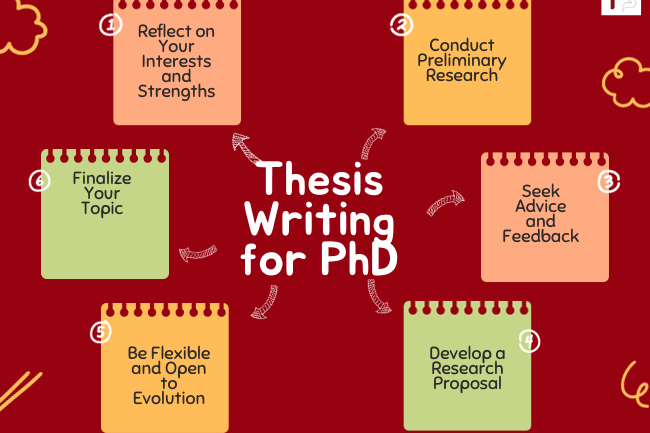
A PhD thesis is a different challenge. You are not summarizing knowledge. You are creating it. These PhD thesis writing tips are for the long game.
Write Every Day Without Exceptions
PhD graduates who finish on time almost all say the same thing: they wrote every single day, even just a little. 200-word count. A rough paragraph counts. Keep the momentum going no matter what.
Treat Your PhD Like a Professional Job
- Set fixed working hours and stick to them
- Take proper breaks and weekends off
- Do not let your PhD consume your entire identity and social life
This structure keeps your research sustainable over three to five years.
Separate Reading Days From Writing Days
Do not mix research and writing in the same time block. It slows both down. Assign specific days for reading and note-taking. Assign other days purely for writing. When it is writing time, close every research paper and just write.
Let Go of Perfectionism
Your PhD thesis does not need to be perfect. It needs to be done and defensible. Perfectionism is the number one reason smart PhD students take years longer than they should. Write imperfectly and revise later.
Common Mistakes Students Make (And How to Avoid Them)
- Starting too late: Begin writing from week one, even rough notes
- Vague thesis statement: Use the three-step method above every single time
- Ignoring supervisor feedback: Every comment is a roadmap to a better grade
- Never proofreading: Read your work out loud before submission, always
- Skipping transitions between chapters: Each chapter should set up the next one clearly
Quick Pre-Submission Checklist
Before you submit, run through this list:
- The thesis statement is clear, specific, and arguable
- Every claim has a source to back it up
- All citations are consistently formatted
- The abstract accurately summarizes the whole thesis
- Grammar and spelling have been proofread at least twice
- University formatting guidelines have been followed
If you can tick every box, you are ready.
FAQ: People Also Ask About Thesis Writing Tips
What are the most important tips for writing a thesis for beginners?
Start with a clear research question, build a daily writing habit of at least 300 words, and write your thesis statement before anything else. These three steps alone put you ahead of most first-time thesis writers.
How do I write a good thesis statement?
A good thesis statement makes a specific, arguable claim in one to two sentences. Use the three-step method: write your topic, ask “so what?”, and turn your answer into a clear claim someone could reasonably disagree with.
What are the best master’s thesis writing tips for graduate students?
Choose a topic you genuinely care about, communicate with your supervisor regularly, and organize your literature review by theme rather than by author. These three habits produce consistently stronger master’s theses.
Are PhD thesis writing tips different from master’s level advice?
Yes. At the PhD level, you are creating new knowledge, not just reviewing it. The biggest shifts are writing every single day without exception, treating your research like a professional job with fixed hours, and accepting imperfection as a necessary part of the process.
How long does it take to write a thesis?
It varies by level. An undergraduate thesis might take 3 to 6 months. A master’s thesis typically takes 6 to 18 months. A PhD thesis usually takes 3 to 5 years. Starting early and writing consistently shortens that timeline significantly.
What are tips for writing a strong thesis statement at the PhD level?
Your PhD thesis statement should answer: “What does the world now know that it did not know before your research?” It must be original, specific, and significant enough to justify years of independent study. Avoid broad claims and focus on a precise, defensible contribution.
Worth Reading
Conclusion
The best thesis writing tips are not complicated. Start early, write daily, build a strong thesis statement, use your supervisor well, and do not chase perfection. Whether you are following tips for writing a thesis at the undergraduate or doctoral level, the core of the process is the same: clear thinking, consistent effort, and honest revision.
There is no magic shortcut to a great thesis. But with the right habits and the right strategy, finishing one is absolutely within your reach. You have the intelligence. Now you have the tips for writing a good thesis to match it. Go write something you are proud of.